


AI Predicts Behaviour of Quantum Systems
Scientists from HSE University, in collaboration with researchers from the University of Southern California, have developed an algorithm that rapidly and accurately predicts the behaviour of quantum systems, from quantum computers to solar panels. This methodology enabled the simulation of processes in the MoS₂ semiconductor and revealed that the movement of charged particles is influenced not only by the number of defects but also by their location. These defects can either slow down or accelerate charge transport, leading to effects that were previously difficult to account for with standard methods. The study has been published in Proceedings of the National Academy of Sciences (PNAS).

Electrical Brain Stimulation Helps Memorise New Words
A team of researchers at HSE University, in collaboration with scientists from Russian and foreign universities, has investigated the impact of electrical brain stimulation on learning new words. The experiment shows that direct current stimulation of language centres—Broca's and Wernicke's areas—can improve and speed up the memorisation of new words. The findings have been published in Neurobiology of Learning and Memory.

Artificial Intelligence Improves Risk Prediction of Complex Diseases
Neural network models developed at the HSE AI Research Centre have significantly improved the prediction of risks for obesity, type 1 diabetes, psoriasis, and other complex diseases. A joint study with Genotek Ltd showed that deep learning algorithms outperform traditional methods, particularly in cases involving complex gene interactions (epistasis). The findings have been published in Frontiers in Medicine.

Genetic Prediction of Cancer Recurrence: Scientists Verify Reliability of Computer Models
In biomedical research, machine learning algorithms are often used to analyse data—for instance, to predict cancer recurrence. However, it is not always clear whether these algorithms are detecting meaningful patterns or merely fitting random noise in the data. Scientists from HSE University, IBCh RAS, and Moscow State University have developed a test that makes it possible to determine this distinction. It could become an important tool for verifying the reliability of algorithms in medicine and biology. The study has been published on arXiv.

The Zombie Firm Phenomenon, SME Digital Transformation and ICT Solutions: IDLab at the XXV Yasin (April) International Academic Conference
IDLab researchers of the Higher School of Economics - Maria Molodchik, Anna Davii, Egor Ivanov, Nikita Matkin, Mikhail Usanin and Alexey Smirnov took part in the XXV Yasin (April) International Academic Conference. The anniversary conference was held at the Moscow campus of the Higher School of Economics on April 15-18, 2025 as part of the Decade of Science and Technology in Russia program.

Fragmentation and Bloc Formation: How the Global Economy is Changing
Sergey Dubinin, former head of the Bank of Russia and Professor of Finance and Credit at the Faculty of Economics at Moscow State University, has delivered an honorary address at the XXV Yasin (April) International Academic Conference. He spoke about the transformation of the global monetary and financial system, as well as the Russian economy.

Scientists Propose Novel Theory on Origin of Genetic Code
Alan Herbert, Scientific Supervisor of the HSE International Laboratory of Bioinformatics, has put forward a new explanation for one of biology's enduring mysteries—the origin of the genetic code. According to his publication in Biology Letters, the contemporary genetic code may have originated from self-organising molecular complexes known as ‘tinkers.’ The author presents this novel hypothesis based on an analysis of secondary DNA structures using the AlphaFold 3 neural network.

More Children, More Happiness: HSE Experts Study Impact of Number of Children on Russians' Assessment of Happiness
Russians with children feel happier than those without children. At the same time, the number of children influences the assessment of happiness: the more children Russians have, the happier they feel. These conclusions were outlined inthe report ‘More Children, More Happiness: The Impact of the Number of Children on Russians’ Assessment of Happiness,’ presented at the XXV Yasin (April) International Academic Conference on Economic and Social Development, held on April 15–18 at HSE University. The study was conducted by Elena Churilova, Senior Research Fellow, and Dmitry Jdanov, Chief Research Fellowat HSE International Laboratory for Population and Health.

Winners of New RSF Awards Include Projects from Four Campuses of HSE University
The Russian Science Foundation has completed its review of projects submitted for grants to support fundamental and exploratory research by teams, as well as 2022 grant winners applying for project extensions. In addition, interdisciplinary projects for fundamental and exploratory research awarded under the Presidential funding programme have been announced. Projects awarded under each of the three categories include submissions from researchers at all four campuses of HSE University.
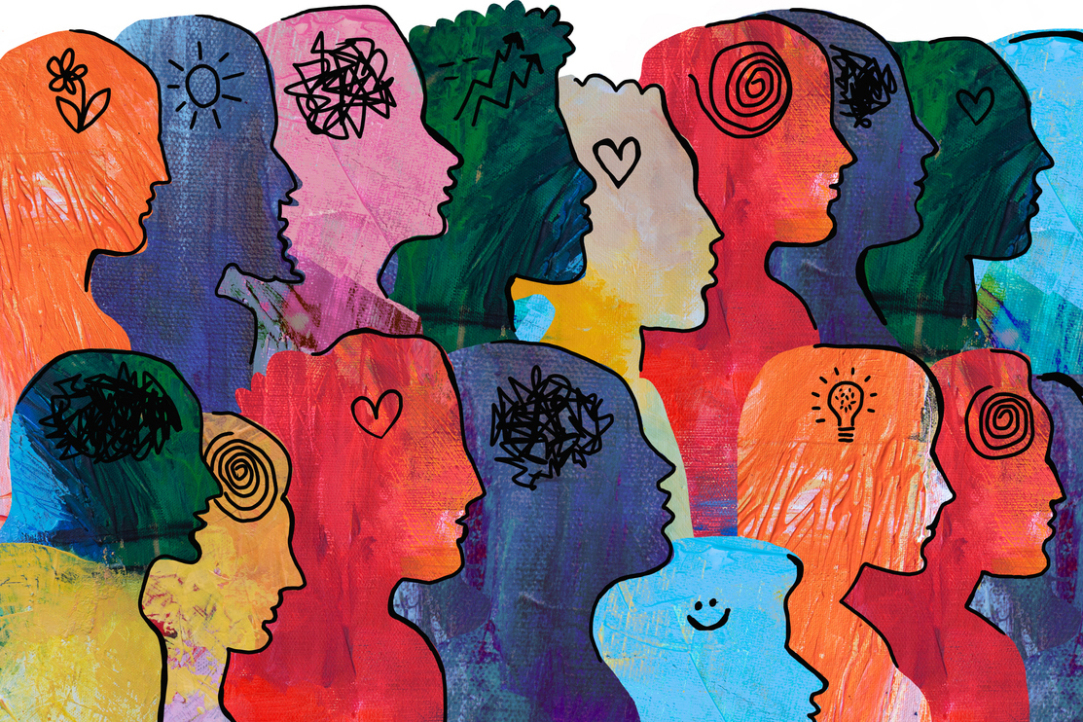
Scientists Identify Fifteen Key Motives Driving Human Behaviour
Researchers at HSE University and the London School of Hygiene and Tropical Medicine have identified 15 key motives that drive human behaviour. By analysing people's views, preferences, and actions through an evolutionary lens, they demonstrated how these motives intertwine to shape habits and interpersonal relationships. The findings have been published in Personality and Individual Differences.